Conference | South Asian Economics, Trade & Development | CDIPR | OECD & UNIDO | Virtual | Submit Abstract by 10 June 2026
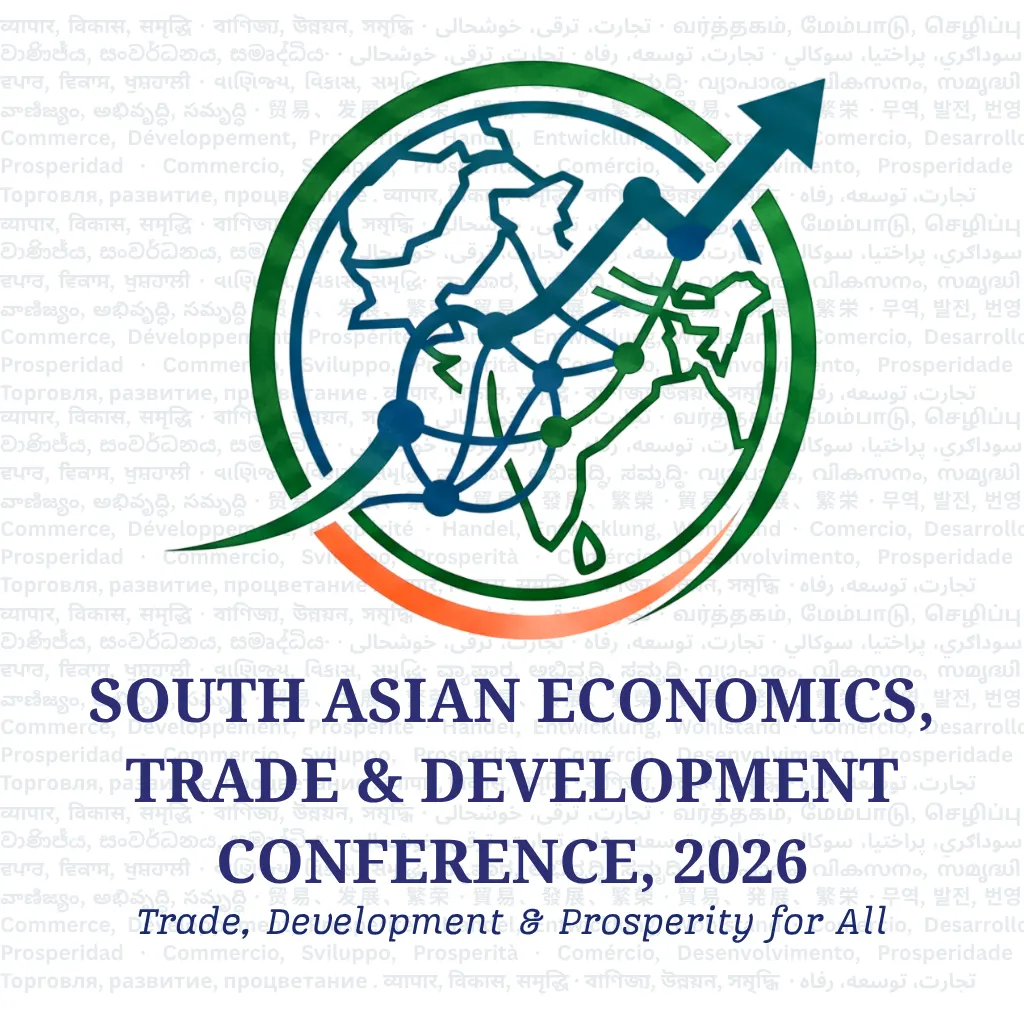 Conference | South Asian Economics, Trade & Development | CDIPR | OECD & UNIDO | Virtual | Submit Abstract by 10 June 2026
About Centre for Development of Intellectual Property and Research (CDIPR):
The Centre for Development of Intellectual Property and Research (CDIPR) is a premier institution established as India’s First Non-Governmental Research Organisation dedicated to Intellectual Property Rights (IPRs). Operating under the Naovina Development of Intellectual Property and Research Foundation as a registered Non-Governmental Organisation (NGO), CDIPR is dedicated to promoting and protecting Intellectual Property Rights (IPRs) within India, thereby fostering a conducive environment for innovation and creativity. In today’s global landscape, where intellectual property serves as a cornerstone for economic growth, technological advancement and cultural development, CDIPR plays a pivotal role in driving forward-thinking policies, research and education. CDIPR is a community, Connecting 2200+ Members & 12,300+ Global Academicians on Intellectual Property Rights.
About the Conference:
The South Asian Economics, Trade & Development Conference, 2026 is a flagship international academic–policy forum under the South Asian Academic Summit, 2026, organised by the Centre for Development of Intellectual Property and Research (CDIPR), Naovina Development of Intellectual Property and Research Foundation, in collaboration with the Organisation for Economic Co-operation and Development (OECD) and the United Nations Industrial Development Organization (UNIDO). Powered by the Community for Academic Research and Development Foundation, the Conference seeks to foster meaningful dialogue on economic transformation, regional trade cooperation, sustainable industrialisation, and inclusive prosperity across South Asia and the wider Global South. The Conference is conceived as a high-impact interdisciplinary platform that bridges academia, policymaking, international trade practice, and development governance. At a time when developing economies face increasing pressures from global market disruptions, geopolitical shifts, climate vulnerability, digital transitions, and socio-economic inequalities, the need for collaborative frameworks for trade-led and inclusive development has become more urgent than ever. South Asia represents one of the world’s fastest-growing yet most economically unequal regions, with immense opportunities in industrial development, regional connectivity, trade facilitation, digital commerce, infrastructure, and human capital development. Despite enormous economic potential, regional trade integration in South Asia remains significantly underdeveloped. Structural barriers, fragmented policies, infrastructure deficits, regulatory bottlenecks, trade imbalances, and institutional constraints continue to impede sustainable prosperity. Against this backdrop, the Conference aims to critically examine the evolving relationship between economics, trade, industrial development, public policy, innovation, and sustainable prosperity. The Conference will facilitate scholarly and policy-oriented discussions on how economic systems, regional cooperation mechanisms, industrial strategies, and trade partnerships can be leveraged to promote equitable growth and social well-being.
Conference Objectives:
- To critically analyse the role of trade and economic policy in shaping development trajectories across South Asia and the Global South.
- To promote regional cooperation and economic integration among South Asian economies.
- To examine the relationship between industrial development, trade competitiveness, and sustainable prosperity.
- To explore strategies for inclusive economic growth, poverty alleviation, and employment generation.
- To discuss emerging trends in global trade, digital commerce, innovation, and economic governance.
- To foster dialogue between academia, policymakers, industry leaders, development agencies, and international organisations.
- To provide a global platform for students, researchers, and early-career scholars to engage with contemporary economic and trade challenges.
Dialogue Date & Format:
- Dates: 20th June 2026
- Format: Virtual Mode
Key Themes and Sub-Themes:
Participants are invited to submit papers engaging with the following thematic tracks:
1. Economics, Growth and Inclusive Development
- Inclusive economic growth and equitable prosperity
- Poverty alleviation and social welfare policies
- Income inequality and redistributive mechanisms
- Labour markets, employment generation, and decent work
- Economic resilience in developing economies
- Human development and economic well-being
2. International Trade and Regional Cooperation
- South Asian regional trade integration
- Trade agreements and regional economic cooperation
- Trade facilitation and customs modernisation
- Cross-border commerce and regional connectivity
- Global value chains and market integration
- Trade competitiveness in emerging economies
3. Comparative Constitutionalism and Development
- Transformative constitutionalism in the Global South
- Socio-economic rights and judicial enforcement
- Constitutional courts and development policy
- Comparative constitutional experiences in South Asia, Africa, and Latin America
- Rights-based approaches to development governance
4. Industrial Development and Manufacturing Competitiveness
- Sustainable industrialisation and industrial policy
- Manufacturing transformation in South Asia
- MSMEs and industrial growth
- Industry 4.0 and technological transitions
- Industrial innovation and competitiveness
- Public-private partnerships for industrial development
5. Trade Policy, Regulation and Governance
- Trade governance and regulatory frameworks
- Tariff and non-tariff barriers
- International trade law and dispute settlement
- Economic diplomacy and trade negotiations
- Export promotion strategies
- Institutional reforms for trade efficiency
6. Digital Economy, Innovation and E-Commerce
- Digital trade and cross-border digital markets
- E-commerce and emerging business ecosystems
- Digital payments and financial inclusion
- Artificial intelligence and economic transformation
- Innovation ecosystems and startup economies
- Cybersecurity and digital economic governance
7. Sustainable Development and Green Economy
- Sustainable economic growth models
- Climate-resilient trade and development
- Green industrialisation and circular economy
- Renewable energy and economic transformation
- Sustainable supply chains
- Financing sustainable development initiatives
8. Entrepreneurship, MSMEs and Local Economic Development
- Entrepreneurship ecosystems in South Asia
- Startup innovation and financing
- Women-led entrepreneurship and economic inclusion
- MSME development and market access
- Skill development and entrepreneurial education
- Rural enterprises and local economic resilience
9. Finance, Investment and Economic Stability
- Foreign direct investment (FDI) and economic growth
- Development finance and investment strategies
- Public finance and fiscal governance
- Financial inclusion and banking access
- Inflation, monetary policy, and economic stability
- Capital markets and emerging investment trends
10. Food Security, Agriculture and Trade
- Agricultural trade and food systems
- Food security and economic resilience
- Sustainable agriculture and rural development
- Agricultural supply chains and exports
- Technology in agricultural economics
- Trade and climate impacts on agriculture
11. Logistics, Infrastructure and Connectivity
- Trade logistics and supply chain resilience
- Smart infrastructure and regional connectivity
- Ports, transport corridors, and trade efficiency
- Infrastructure financing and economic development
- Urbanisation and economic transformation
- Economic geography and regional competitiveness
12. Global Governance and Development Cooperation
- Role of international organisations in development
- South–South cooperation frameworks
- Development partnerships and regional diplomacy
- International economic institutions and reform
- Multilateralism and global trade governance
- Economic justice and global inequalities
13. Economics Beyond GDP: Human Prosperity and Social Justice
- Measuring prosperity beyond GDP
- Social protection systems and economic welfare
- Human-centred economic policymaking
- Education, healthcare, and economic development
- Gender and inclusive growth frameworks
- Economic rights and social justice
Format and Presentation:
The Conference will be conducted entirely in virtual mode, ensuring wide participation across regions of the Global South. Selected authors will present their papers in moderated academic panels before an international audience of scholars, practitioners, and policy experts.
Recognition & Awards:
Selected contributors will receive:
- Publication in the International edited Volume titled, “Trade Development & Prosperity for All: South Asian Perspectives on Economics, Trade and Inclusive Growth” with ISBN 978-81-998939-2-4. To be published and distributed across 15 nations, with international editorial and institutional collaboration.
- International Certificate of Presentation
- Best Papers to be Featured in the Global South Trade & Development Review Edition, 2026
- Trade Development Innovation Award for impactful and actionable research
- Emerging Scholar Award for students and early-career researchers
- Opportunities for publication in policy briefs, international blogs, and partner platforms
- Invitations for future international collaborations, conferences, and research initiatives
- Selected works will be highlighted through international academic blogs, policy briefs, and partner platforms
Call for Papers Timeline:
- Abstract Submission Deadline: 10th June, 2026
(Abstracts should be between 250–300 words, clearly indicating the research question, methodology and relevance to the Conference themes.)
- Notification of Abstract Selection: 12th June, 2026(Selected authors will be notified via email and invited to submit full papers.)
- Full Paper Submission Deadline: 17th June, 2026(Full-length papers should be 3,000–4,000 words and follow the Conference’s Submission Guidelines.)
- Presentation Confirmation by Authors: 18th June, 2026(Selected participants must confirm attendance and complete registration.)
- Date of Conference: 20th June, 2026
Submission Guidelines:
Categories:
- Research Article: 3,000 to 5,000 words
- Policy Paper / Legislative Analysis: 3,000 to 5,000 words
- Case Studies / Legal Commentaries: 2,000 to 4,000 words
Format and Structure:
- Font: Times New Roman
- Body Text: 12pt, Justified Alignment
- Headings: 14pt, Centre Alignment
- Subheadings: 13pt
- Footnotes: 10pt, Left Alignment
- Citation Style: Bluebook 21st Edition
- Spacing: 1.5
- Language: English only
Abstract: Each submission must include a concise abstract not exceeding 300 words summarising the core ideas of the paper with 5 keywords.
Originality:
- Submissions must be entirely original and unpublished.
- Plagiarism should not exceed 10%, and AI-generated content is not allowed. Submissions violating these guidelines will be rejected.
Co-Authorship: Papers may have up to two authors.
Review Process:
- A two-stage internal review will assess submissions.
- Authors may be required to revise their papers based on feedback regarding content, structure, or formatting.
Why Participate?
- Present your research at a premier international dialogue dedicated to economics, trade, and development in South Asia and the Global South.
- Engage with leading scholars, policymakers, industrial experts, international organisations, trade associations and practitioners from 70 nations.
- Be published in an International Edited Volume titled, “Trade Development & Prosperity for All: South Asian Perspectives on Economics, Trade and Inclusive Growth“, Co-curated with the Organisation for Economic Co-operation and Development (OECD) and the United Nations Industrial Development Organization (UNIDO).
- Contribute to contemporary debates on regional trade integration, sustainable industrialisation, economic inclusion, and prosperity.
- Receive international presentation certification, awards, and scholarly recognition.
- Expand your professional network and collaborate with global institutions, development agencies, and policy communities.
- Enhance academic visibility and contribute to evidence-based policymaking.
Abstract Submission Form:
Contact Details:
For direct communication, email us at events@cdipr.ac.in.
For More Details:
Disclaimer:
Any content on this website (i.e www.lawof.in)is solely for information purpose. It does not constitute formal recommendation or any professional advice. Due care has been taken in posting information, the existence of omissions herein is not ruled out. Neither the author nor lawof.in accepts any liabilities for any loss or damage of any kind arising out of any inaccurate or incomplete information on this website nor for any actions taken in reliance thereon. No part of posts on this website should be distributed or copied (except for non-commercial use, personal) without express written permission of lawof.in if there is any question or query then please mail on lawof.in@gmail.com
#SouthAsianEconomics2026
#TradeDevelopmentProsperity
#GlobalSouthDialogue
#InclusiveGrowthSummit
#RegionalTradeIntegration
#SustainableIndustrialisation
#DigitalEconomyInnovation
#EconomicPolicyResearch