 Should Law Professors Be Elevated as Judges in India? The Constitutional Debate
The Debate is not just legitimate, it is necessary

Can law professors be elevated as judges in India? This article explores Article 124(3)(c), the concept of distinguished jurists, constitutional intent, global practices, and the urgent need to rethink judicial appointments.
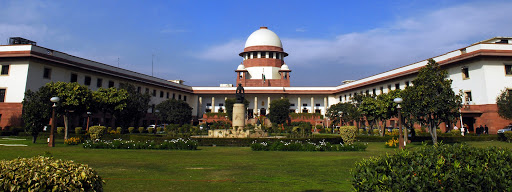

“Imagine a Supreme Court where Law Professors sit beside judges…”

In India, judicial elevation has traditionally followed a familiar path from the Bar to the Bench. Advocates with years of courtroom practice are considered the natural reservoir for judicial appointments. However, as the Indian judiciary grapples with mounting pendency, complex constitutional questions and evolving socio-economic realities an important question resurfaces: Should Law Teachers be elevated as Judges in India?
Law professors shape legal thinking, train future judges, advocates and contribute significantly to constitutional interpretation through scholarship. Yet, their presence on the Bench remains Zero. Is this exclusion a constitutional necessity, an institutional habit or a missed opportunity for judicial excellence? This article examines the legal, constitutional, and policy dimensions of elevating law teachers as judges in India.
Article 124(3)(c) of the Constitution has not been used in India. Even though it was envisaged by the Constituent Assembly.
What the Constitution Says, Contrary to popular belief, the idea of law professors becoming judges is neither unconstitutional nor alien to Indian law. The Constitution of India explicitly recognises “distinguished jurists” under Article 124 (3) of the Constitution of India as a source for judicial appointments, especially to constitutional courts. This means Article 124 (3) (C) provides for the appointment of a distinguished jurist as a Supreme Court judge.
But who exactly qualifies as a “distinguished jurist”? This question lies at the very heart of the debate. But in a simple way we can say “Distinguished jurist” means someone recognized for outstanding legal scholarship, not necessarily a practicing lawyer.
The Constitution of India envisages three distinct pathways to the Supreme Court Bench. Under Article 124(3)(a) and (b), Judges serving in the High Courts and advocates with the requisite standing at the Bar are eligible for elevation. Significantly, Article 124(3)(c) introduces a third, often overlooked, category a “distinguished jurist”, who may be appointed as a Judge of the Supreme Court in the opinion of the President.
This constitutional provision deliberately widens the pool of judicial talent beyond the courtroom, recognising that legal distinction may arise not only from advocacy or judging but also from scholarship, teaching and intellectual contribution to the law.
In reality, only the High Court judges and practicing lawyers of the Supreme Court and High Court are appointed as judges of the Supreme Court. As a result, the elevation of law professors often appears more like a theoretical possibility than a lived reality. This gap between constitutional design and institutional practice lies at the heart of the current debate. The absence of law professors on the Bench, therefore, is not due to lack of eligibility but lack of institutional imagination.
During the Constituent Assembly Debates, the framers expressed concern that judicial appointments should not be monopolised by one profession. The inclusion of “distinguished jurist” was meant to:

To achieve a more diverse judicial composition on the Supreme Court of India, the “distinguished jurist” category was created as an eligibility requirement when drafting India’s Constitution. On May 24th 1949, H.V. Kamath, a member of the Constituent Assembly who proposed this category of eligibility for Supreme Court Judges, remarked “The purpose of my proposal is to provide the President with a broader range of candidates for looking at and appointing judges to the Supreme Court.
I am confident that judges or advocates are not the only categories from which we should be looking to appoint judges. One can see the criteria used in selecting judges for the International Court of Justice in The Hague”.
In Nov 12, 2025, Professor Phoebe Okowa, Professor of Public International Law at the School of Law at Queen Mary University of London, has been elected as a Judge of the International Court of Justice (ICJ) by the United Nations General Assembly and the United Nations Security Council.
Why this is not happening in India though we have the provision under Indian Constitution. The Constitution permits it. The framers envisioned it. Global practice supports it. Academic excellence demands it. What remains is institutional courage.
Global Practices, the elevation of law professors to the judiciary is not an exception. it is a norm.
For Examples:
But there is a provision under India constitution under Article 124(3) i.e “distinguished jurist” under this provision one law professor can be the Judge (Jurist).Yet, their presence on the Bench remains Zero. India, despite its rich academic tradition, lags behind in this respect.
Why India Hasn’t Appointed Law Professors, In order to find answers to this question, we can use some examples of foreign precedents with an academic as part of their judicial appointment process. For example, in the US, many Supreme Court Justices have been Law Professors. In the UK, an academic will be a member of many appellate courts.
Had this constitutional vision been meaningfully implemented, India’s Supreme Court would have been enriched by the presence of legendary legal minds such as Prof. Upendra Baxi, Prof. S. P. Sathe, Prof. P. K. Tripathi, Prof. V. N. Shukla, Prof. M. P. Jain, Prof. N. R. Madhava Menon and many others of their stature. These were not merely teachers of law; they were architects of modern Indian legal education, pioneers who reshaped academic thought, nurtured generations of jurists and expanded the intellectual frontiers of constitutional and legal scholarship in the formative years of the Republic. Regrettably, despite the Constitution explicitly envisaging the elevation of “distinguished jurists” to the Supreme Court. “Unfortunately, the Supreme Court of Inia missed these distinguished ‘jurists’ as its judges,”.
“Even at this stage, a sincere implementation of this constitutional provision would make it possible to appoint several eminent law professors in India as judges of the Supreme Court.” It Would be better for Judiciary to include legal academician who created Advocates and Judges.
Distinguished jurists are not confined to courtrooms. They are found:
India has no shortage of eminent law professors who meet global standards of judicial excellence. The real challenge lies in recognition and selection, not availability.
The author believes that law professors play a crucial role in generating high quality knowledge for the legal field. They have the potential to be even more effective as judges themselves. It’s important that they don’t limit their contributions to just the classroom, they should also be involved in practical teaching, emphasizing top-notch research and publications.
Beyond just the Supreme Court and High Courts, there are numerous quasi-judicial bodies where their expertise could make a significant impact if given the chance. Organizations like the National Commission for Women (NCW), National Human Rights Commission (NHRC), various Tribunals and several other Commissions related to legal matters could serve as excellent platforms for legal academics to influence law, justice and governance.
There’s no doubt that law educators possess a wealth of intellectual resources that often surpass those of judges and lawyers. What truly matters is the effort and opportunities provided to them. If these individuals are entrusted with meaningful roles in judicial and quasi-judicial bodies, it could greatly enhance the quality of the legal profession and improve its reputation among the general public.
Practical Pathways:
As India’s judiciary confronts unprecedented challenges ranging from constitutional crises to technological transformation, the need for diverse judicial talent has never been greater.
Elevating law teachers as judges is not about replacing advocates; it is about complementing courtroom experience with academic wisdom.
The question is no longer whether law teachers can be elevated as judges but whether India can afford not to consider them. The Constitution permits it. The framers envisioned it. Global practice supports it. Academic excellence demands it. What remains is institutional courage.
What should policymakers do next?
A Call for Reform and Further Research
Should Law Teachers Be Elevated as Judges in India?
The debate is not just legitimate, it is necessary.
NOTE: “These are my opinions, whether criticism or appreciation, your views are welcome.” I will be very happy to get comment on this article. Please mail your comment or suggestions on lawof.in@gmail.com
About the Author:
Dr. Dharmender Patial
Ph.D, LL.M, LL.B | IIM Kashipur Alumnus
Professor & Dean I Reputed Law Schools in India.
.
#LawProfessorsAsJudges #JudicialAppointmentsIndia #DistinguishedJurists #SupremeCourtOfIndia #JudicialReformsIndia #LawProfessors #LawTeachers
#FromClassroomToCourtroom #ConstitutionalDebate #FutureOfJudiciary #LawOF #LawOFLegalDebate



© LAWOF.in | All Rights Reserved 2026.